

Welcome to Wat Chomtong Germany
Discover the vipassana meditation technique as it is taught by the original Chiang Mai, Thailand facility.
Gain foundation and insight from practing vipassana meditation so that you can appropriately continue the practice at home and in your daily life.
The Vipassana Meditation Center welcomes meditation practitioners every day.
• Minimum stay: 3 days
• Maximum stay: 21 days (Full Basic Program: 21 days)
Walk-ins are not accepted.
Reservation Procedure
Please first contact our staff to check accommodation availability through one of the following channels:
• WhatsApp: +66 92 741 5905 (Meditation Watchomtong)
• Email: info@watchomtong.com
• Chat: www.watchomtong.com
Please contact staff to inquire about venue availability via:
Whatsapp +66 92 741 5905 (Meditation Watchomtong),
E-Mail, info@watchomtong.com
Chat www.watchomtong.com
Once confirmed, please complete the online application form only at:
https://www.watchomtong.com/fom
Walk-ins are not accepted.
_edited.png)

Germany Aug. - Nov. 2026
Meditationskurs Wat Phra That Sri Chomtong, Morshausen, Deutschland bietet einen Vipassana-Meditationskurs an, der auf den Vier Grundlagen der Achtsamkeit basiert, wie sie von Ajahn Tong Sirimongkalo, Wat Phra That Sri Chomtong in Chiang Mai gelehrt werden.


Chiang Mai Thailand Mehr lesen
We welcome anyone wishing to participate in meditation practice every day.


current teaching
Meditation instructor :-
Assistant/translator: Phra Natthaan
language, English
Office, Phra Paitoon
Email info@watchomtong.com for more information

Course start & duration
The minimum duration of the meditation retreat is 3 days. We recommend a 7-10 day stay, or ideally a 24-day basic course or a 14-16 day advanced refresher course. Reservations are required so that our staff can reserve accommodation for you.

Learn 3 forms of meditation
Our teaching is modeled after the meditation center at Wat Chom Tong in Chiang Mai, focusing on mindfulness of the hands, walking, and sitting. Participants are not permitted to apply any other techniques they have learned previously during their meditation training with us.

Meditation report room
Those participating in the meditation practice will receive direct instruction from the master, one person at a time, without others listening. Awareness of states of mind that are not present within oneself is crucial to our practice, because learning meditation with us is not about listening to lectures, but about understanding mental states and addressing only those that truly occur within oneself.
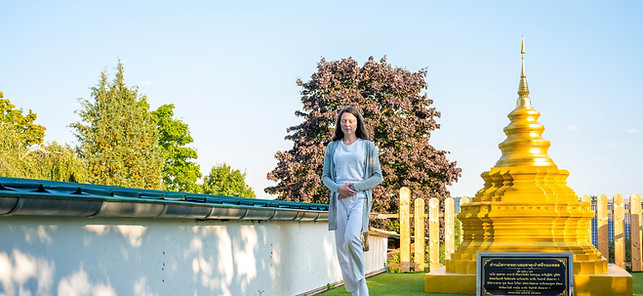
The meditation center, Wat Chom Tong, Germany, is located on the outskirts of the city, surrounded by tranquil nature, ideal for meditation and self-discovery. It's also conveniently accessible by public transportation, and the lovely villagers are always ready to greet visitors with smiles.


leads to the purification of beings,
to overcome sorrow and grief,
to the disappearance of pain and suffering,
to attain the right path,
to experience Nibbana.
It is named the Fourfold Awakening of Mindfulness.
Lord Buddha (Satipatthana-Sutta M 10)
" This path which everyone must walk alone and for himself "

Where to meditate?
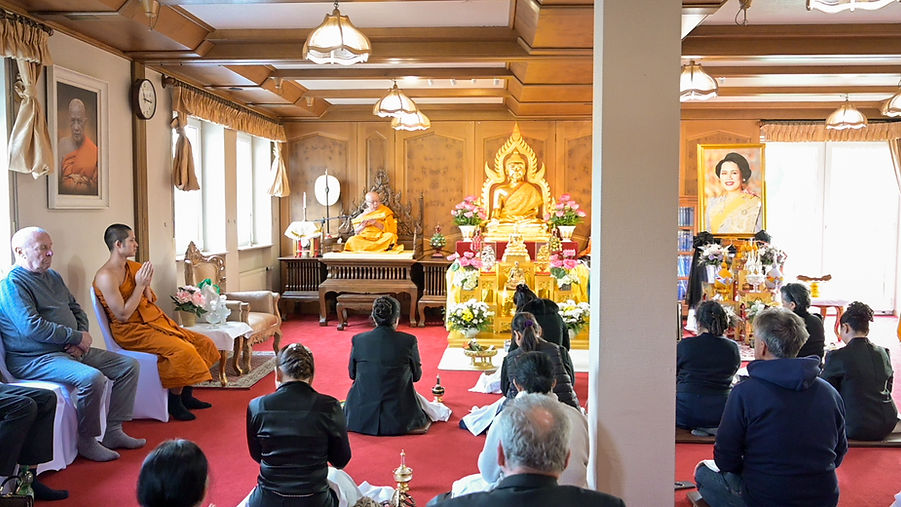
Wat Chomtong Germany has a hall on the first floor that can host up to 50 people. It is a place for chanting and practicing meditation and conducting ceremonies. The third floor (under construction) can accommodate up to around 100 people for teaching meditation and has four private meditation rooms.

Live at a Theravada Buddhist Monastery with the Bhikkhus from Thailand. Minimum stay is 3 days up to 21 days.
During your stay, abide by these eight Buddhist precepts.
Abstaining from killing.
Abstaining from stealing.
Abstaining from all sexual activity.
Abstaining from telling lies.
Abstaining from intoxicating drinks and drugs.
Abstaining from eating after noon.
Abstaining from entertainment and beautifying the body.
Abstaining from using luxurious bed.
A lifetime dedicated to teach the practice of Vipassana Meditation.
Phra Ajahn’s practice focuses on teaching the world to practice Vipassana Meditation. He received an invitation from a student who had practiced in Thailand, to reveal teaching since 1985 in Germany and finally in 2018 at the Federal Republic of Germany. All of his practice focuses have been passed on by Phra Srisilpajarn, the closest disciple who follow along Phra Ajahn throughout every journey. And it will always be.
- June 6-12, 1985: Teaching meditation in Frankfurt. Approximately 80 participants.
- June 19-29, 1989: Teaching meditation in เฮมซูลม์. Approximately 55 participants.
-February 5-26, 1993: Teaching meditation in Frankfurt.
- June 26 - July 16, 1994: Teaching meditation at the Thai Temple of Sri Lanka, Berlin.
- March 1-15, 1995: Teaching meditation in Munich.
- May 9-16, 2004: Teaching meditation at Wat Buddha Piyavararam, Frankfurt.
- May 22-28, 2008: Teaching meditation at Wat Buddha Piyavararam, Frankfurt.
- May 29-June 5, 2008: Teaching. meditation at Dhammajari Meditation Center, Munich.
- November 13-28 2013: Teaching meditation at Wat Buddhavipassana Wassenach
- May 12-22, 2017: Teaching meditation at Watbuddhavipassana Wassenach, Dhammajari Meditation Center, Munich; Wat Phra Buddha Piyavararam, Frankfurt.
- November 26-December 15, 2018: Teaching meditation at Watbuddhavipassana Wassenach Wat Phra Buddha Piyavararam, Frankfurt; Meditation Center, Berlin.


Wat Phradhatu Sri Chomtong Germany e.V. (2022)
Wat Phradhatu Sri Chomtong, Germany (monastery branch) Ajahn Tong Sirimangalo is located on Jakob-Kneip 1, Morshausen, Hunsruck, Rheinland-Pfalz. Watchomtong Germany, is under the patronage of the disciples of Phra Phrom Mongkhol Vi. (Venerable Ajahn Tong Sirimangalo) and all Buddhists Thais and Internationals disciples led by
Phra Srisilpajan Dr. (previous secretary of Ajahn Tong Sirimangalo).
Intent to build a monastery as a memorial and to commemorate Venerable Ajahn Tong Sirimangalo and use as a Vipassana Meditation Center based on the four foundations of mindfulness. Therefore, the Thai Temple Association Committee was established in accordance with the Federal Republic of Germany law.

Thai festival In the temple
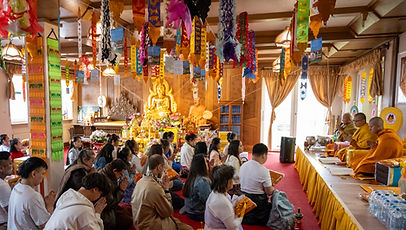

Songkran (April)
The temple organizes the Songkran Festival during the month of April every year for Thai people in Germany. To celebrate Thai New Year's Day, which is an old Thai tradition that has been inherited from the past, with activities such as making merit, offering alms, listening to dhamma sermons, and pouring scented water on the Buddha images, monks, and the hands of the elderly to receive blessings from them. That is beautiful, gentle, caring, and filled with an atmosphere of gratitude, fun, warmth, and respect, using "water" as a medium to create good relations.


Gallery & Rewiew